Search Bar
Billy Joe's Food Farm - ᵀʰᵉʳᵉ ᶦˢ ᶠʳᵉᵉᵈᵒᵐ ᶦᶰ ᵃ ˢᵉᵉᵈ⋅™
  • Food Farm Blog
  • Kid's Blog
  • Home
  • FOR SALE
  • Our Animals
  • Photos From Around the Farm
  • Resources and Websites
  • French Lop Rabbits
    • Rabbits For Sale >
      • Bucks
      • Does
    • Raising Kits: Birth to Weanlings
  • Pet Page
    • Up For Adoption
  • Goats
    • For Sale

Guineas are LOUD

2/16/2013

2 Comments

 
In our first year here, we purchased a flock of seventeen baby guineas, called keets.  Cute as little feathered buttons, they are so tiny.  As they grew, the guineas began to be more vocal.  They grew some more, and were more vocal.  By the time they were roaming around as adolescents, they were the most obnoxiously loud beasts I have ever been around.

All but one of that flock were eaten by owls and coyotes.  So, last fall I bought ten more keets to roam the land this spring, eliminating ticks. 

After guineas are one year old, they make less noise.  It is between three months and one year that they nearly drive me batty.  Don't believe me?  Here is proof!  My young guineas, throwing a fit...


2 Comments

Finally!  Some Progress With Our Many Projects

2/13/2013

3 Comments

 
Spring is a busy time here, and although the calendar tells us that spring is still several weeks away, we are taking advantage of our recent good weather.  We are finally making some progress on some of our many on-going projects.  For us, creating all the spaces, fences and feeders from scratch is a never ending process.

The little rabbits are growing and the bunny enclosure is doing it's job, keeping the rabbits in and the cats out.  Still some finish work (and clean up), to do, but we will wait until the kits are a little bigger so as not to disturb mama and babies.  The below photo shows the rabbit enclosure being built.  It's still not quite finished, but is enclosed.  This photo will give you an idea of how we are using pallets to finish the space.


Picture


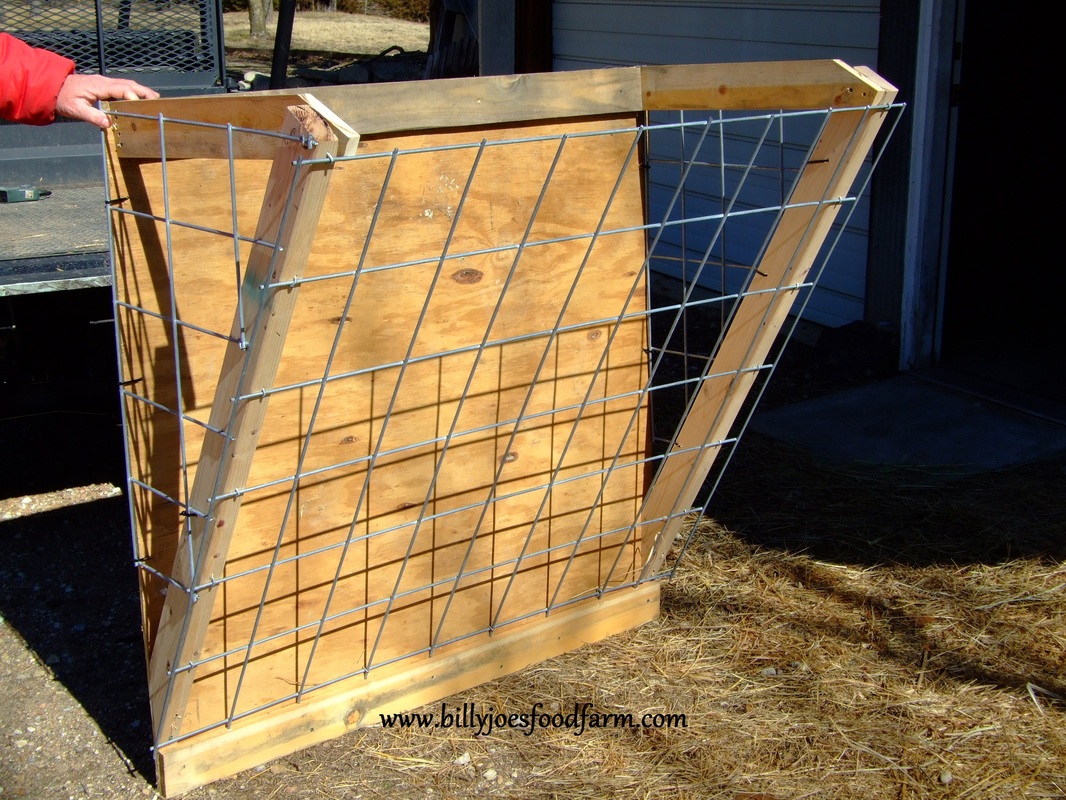
Mr. Elliott built a new hay feeder to hang on the wall of one of the barn stalls, and will be building more for the rest of the stalls.  I am hopeful that we will be wasting less hay now, and the sheep won't have to bend down anymore to eat.  This feeder was built with scrap wood and a hog panel.


Picture


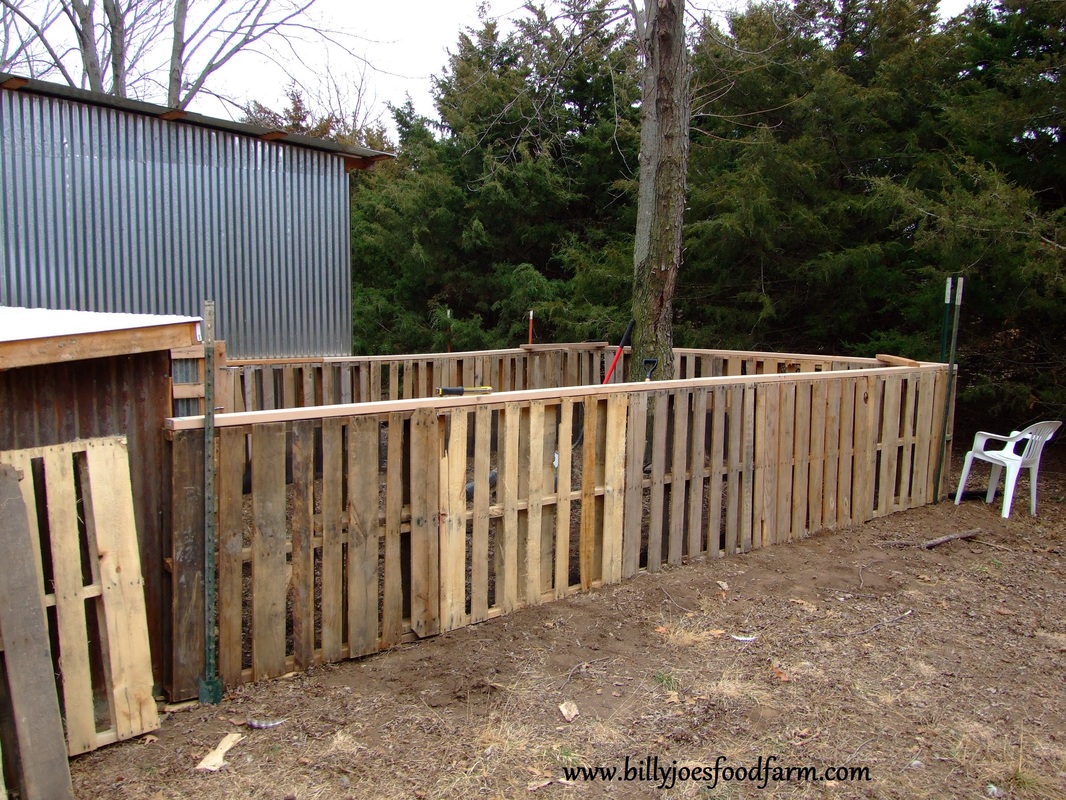
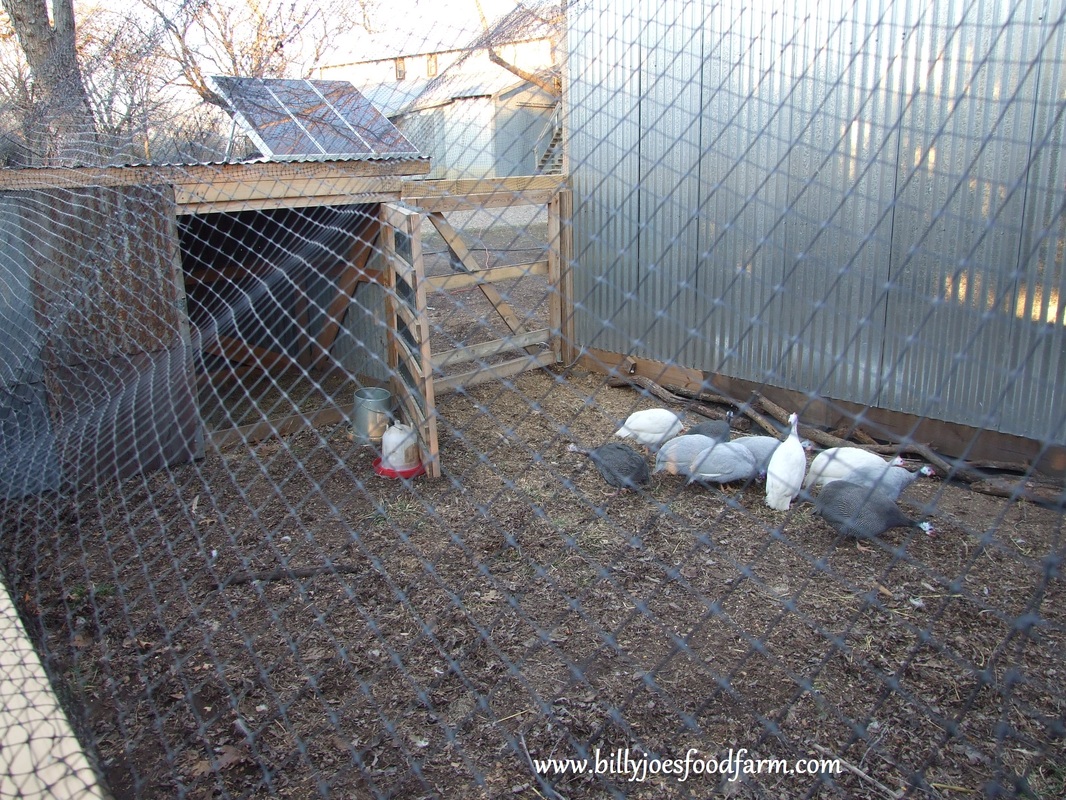
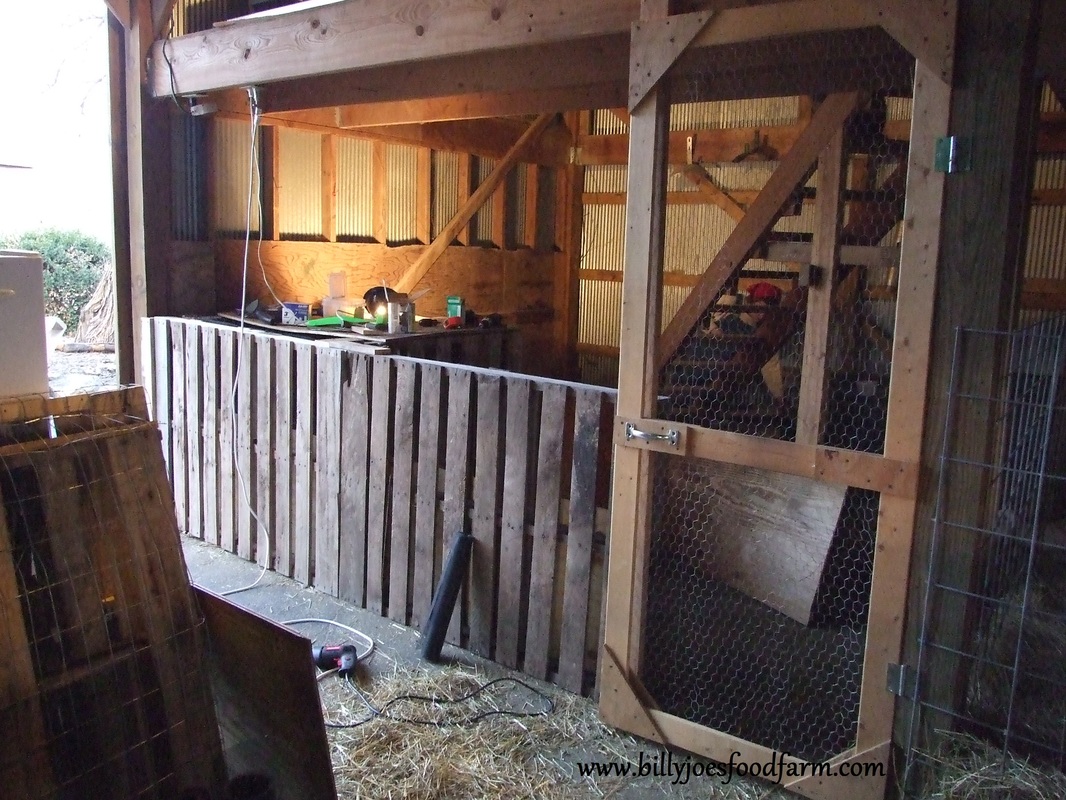
The broody house, next to the chicken coop, now has a fence made from pallets and is fully enclosed above with netting.  The net keeps our birds in as they grow, and keeps the hawks and cats out. 

We have chosen to build our bird coops out of metal, rather than wood.  I prefer the look of wood, but the metal seems to do a better job of keeping the predators out.

The first photo is of the pallets being set up for the fence, the second photo was taken tonight after we finished the netting and put the adolescent guineas in their new enclosure.


Picture
Picture


We are in the process of building a feed storage building out of pallets, and a moveable fence with pallets as well.  Then we have more hay feeders to build, and some table height gardens for me.  I am hopeful we will get most of our building projects finished before I have to consolidate my efforts into growing some food.  Homesteading is sometimes hectic, and often exhausting, but always changing, and never boring.


Now I need to revamp my chicken tractor before the new chicks hatch...tick tock, tick tock...
3 Comments

Eggs and Potatoes, Staples of the Farm

2/10/2013

7 Comments

 
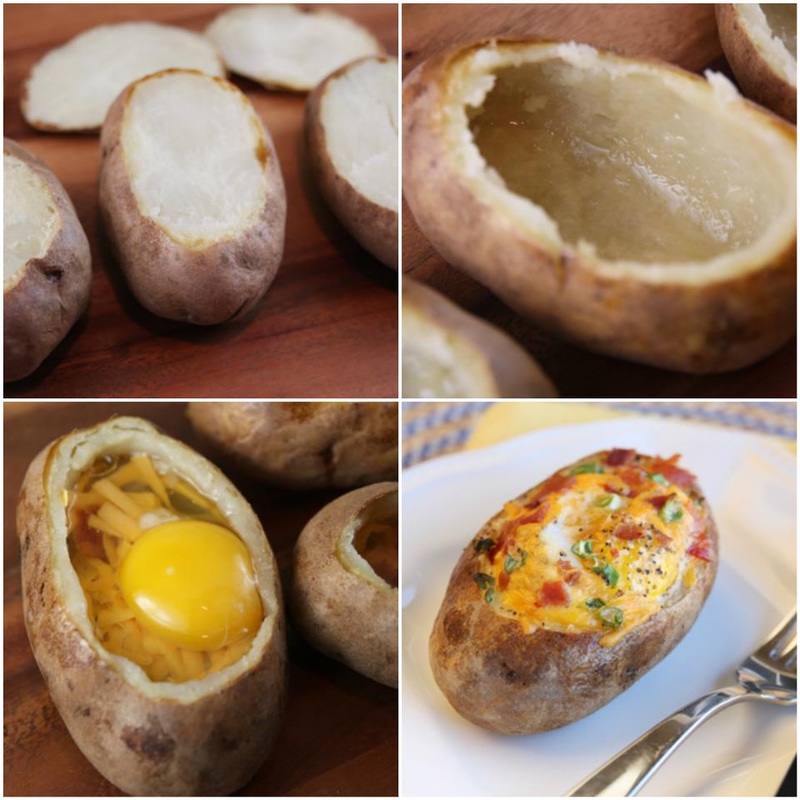
This idea caught my eye, because we are always looking for new ways to use eggs.  This isn't my photo, so you'll have to use your imagination as to how to create this for your family!


Picture
7 Comments

Guilt Over Lives Not Saved, the Downside Of Homesteading

2/8/2013

8 Comments

 
Picture


As someone who has always done what I can to help the innocent creatures of this world, not being able to save a life might be the most difficult part of this homesteading lifestyle that I have chosen.

When I was a kid, I remember visiting a pig farm in Oklahoma.  The place wasn't very well kept, and I was shocked at the conditions in which those pigs lived.  As we toured the facilities, the farmer was gathering up the dead piglets, which he apparently would do every morning.  He had a bonfire going, and was just chucking the little bodies into the fire without a care in the world.  I was horrified, and that memory has stayed with me through the years. 

Couldn't that farmer have done something differently to improve the conditions?  Shouldn't he at least have been less cavalier about the deaths of his livestock?

Fast forward thirty years, and here I am with my own farm, responsible for the animals I have chosen to bring here, even more so for the new lives that are created.  I do not take bringing new life into this world lightly.  I don't see my animals are purely profit, and I don't measure their lives in dollars.  I see myself as their caretaker, for better or worse.

On some days, the "worse" part of that phrase is just difficult to take without drowning in guilt over those creatures who might have lived if I had done things differently.

I haven't lost very many animals since choosing to travel the homesteading road, but those that I have lost stick with me.  Unfortunately when dealing with the care of animals, learning how best to do so sometimes costs an animal it's life.

Sometime in the night, our French Lop rabbit gave birth to six babies.  By this morning, three of them were not in the nest and had died from the cold.  When my husband found them, there were three scattered randomly across the floor that were cold, and were not moving.  I picked them up, wrapped them in a towel and tried rubbing their little bodies while holding them under a light to warm them up.  No response.  I ran them into the house where it was warmer and tried everything I could, but they were gone.

I can't help but feel responsible, and guilty, for their short lives that were filled with suffering.  I was worried about this doe having her first litter in February for this exact reason, but because of her age she needed to be bred.  I could have brought her inside to watch her more closely.  She shouldn't have had as much room as she did.  I should have checked on her more often, and sooner.  On and on I go, knowing that things like this happen on a farm, but regretting that it happened on my watch.

And so, today I will be sad about the three that didn't make it, and tomorrow I will be happy about the three that did.  I have learned some lessons, and while I am glad to gain the experience, it just breaks my heart that those lessons have so high a price.


8 Comments

A Frame Mobile Chicken Coop

2/7/2013

2 Comments

 
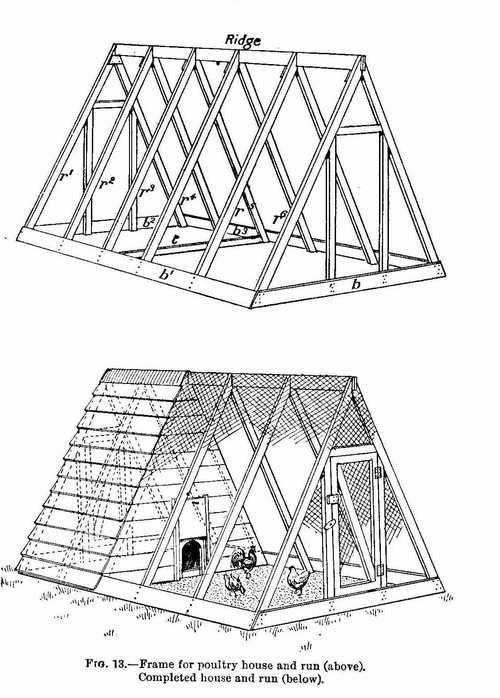
Spring is coming, time to think about chickens!  I'll be loading up my incubator in the next few days; after the chicks and ducks hatch, they will be going outside to my chicken tractor.  I wish I had seen this drawing before I built my Beverly Hillbillies contraption!


Picture
2 Comments

Never A Dull Moment Here At the Farm

2/5/2013

2 Comments

 
It is a beautiful, and strangely warm, February day here in Kansas.  Many doings are afoot outside, in a furious attempt to get ready for spring.  Cleaning out the barn, finishing the rabbit enclosure hopefully before the babies are born, trying to construct the fencing for the broody house so we can hatch some eggs and sell some chicks, babying the seedlings so they will be ready for transplant, finding time to get a new load of straw bales for some raised bed gardens we are planing this year, and on and on the list goes.  

I have so many articles waiting to be finished so that I can put them here for you, but I suppose I need to find time when the sun goes down for that; daylight is burning away and there is much to be done outside.

My Newfoundland keeps finding bits of a rotting dear carcass, which is making her sick.  Woke up this morning to a rather unpleasant gift from her, and found that I have probably killed my celery as well.  It appears the pots were too close to the heater I use to raise the air temperature for our seed starting area, and the celery has collapsed.  Ah well, I will just start more, and learn that celery does NOT like to be warm.

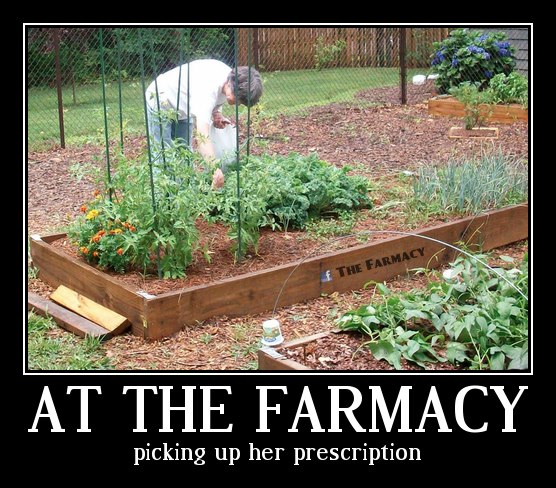
And so, as I drain the last of my morning coffee, all these issues are bouncing around in my head, waiting for me to fix/build/care for them all.  I leave you with this photo, which makes me smile, and the idea that homegrown food is not only good for you physical health, but your mental health as well. 


Picture
2 Comments

Time To Start Thinking About Chicks!

1/15/2013

5 Comments

 
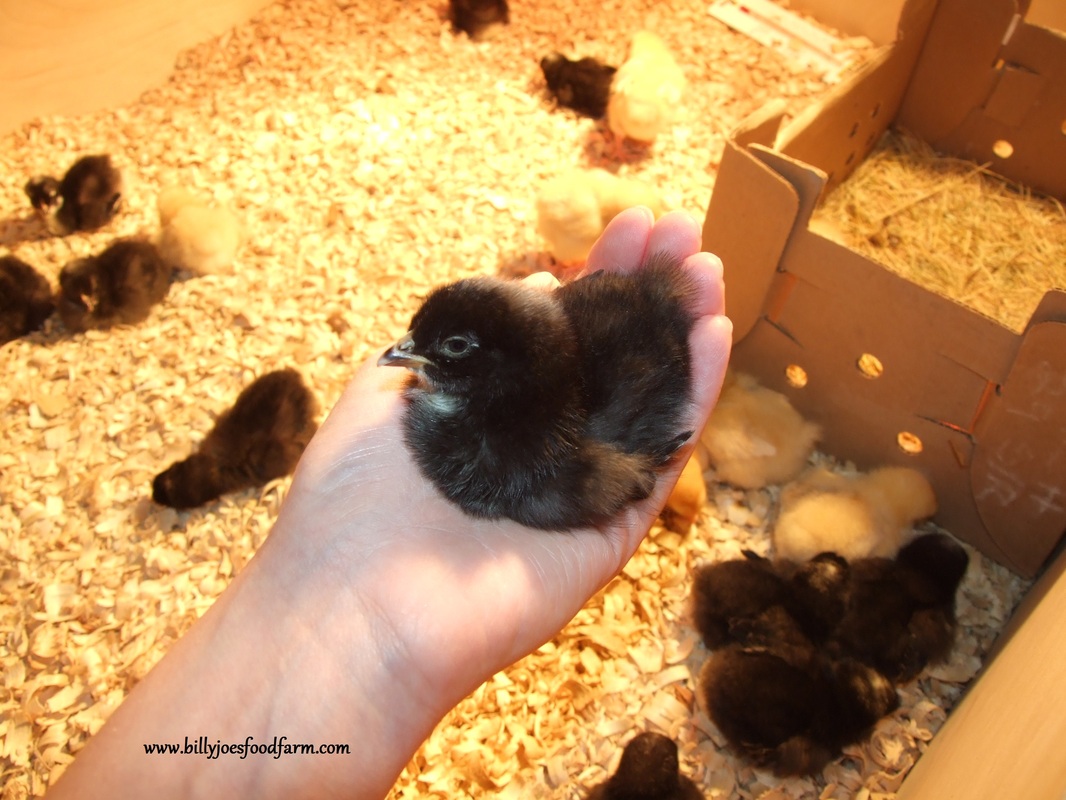
When we made the jump into chickens, we decided on two breeds of egg layers; Barred Plymouth Rocks, and Buff Orpingtons.  Both breeds had good reputations for being pleasant birds who would raise their own young and lay a lot of eggs.  We bought ours from Estes Hatchery in Springfield, Mo, because they were close, as well as a small, family owned operation, which appealed to us.  I recommend Estes highly.  Our birds arrived healthy, and grew well.

If I were to order more chicks, I would choose the Barred Rocks.  They have been more more friendly, while the Orpingtons are not, at all.

Picture


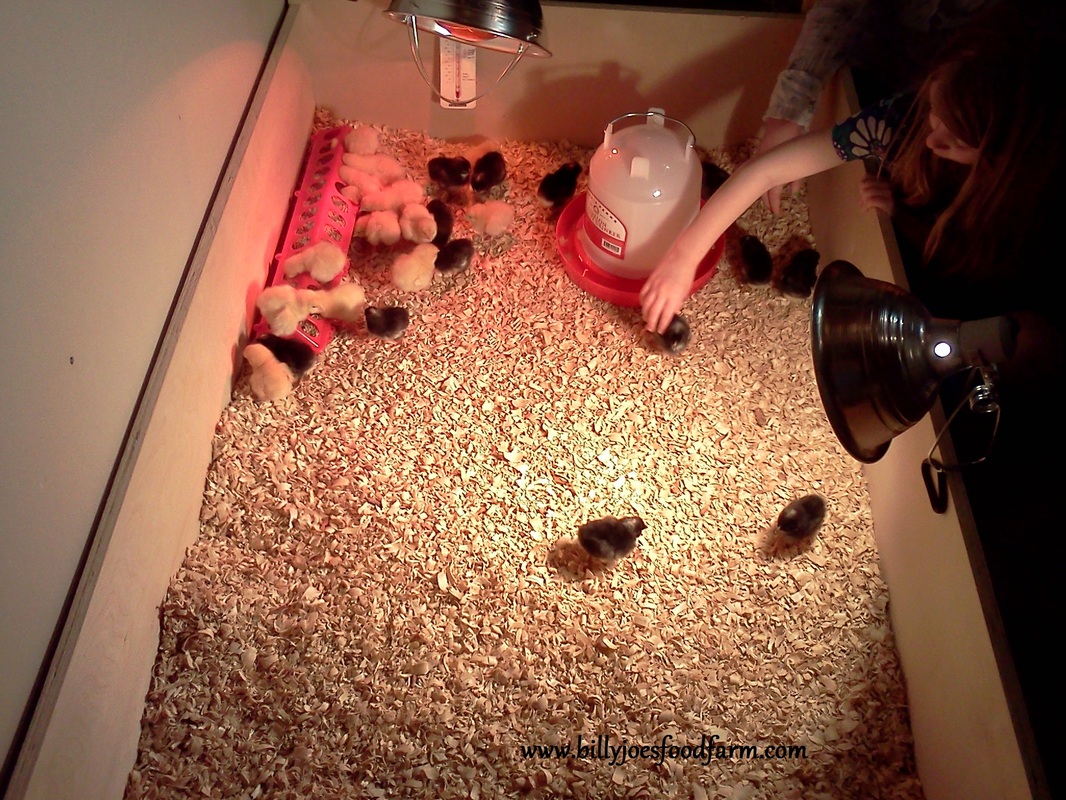
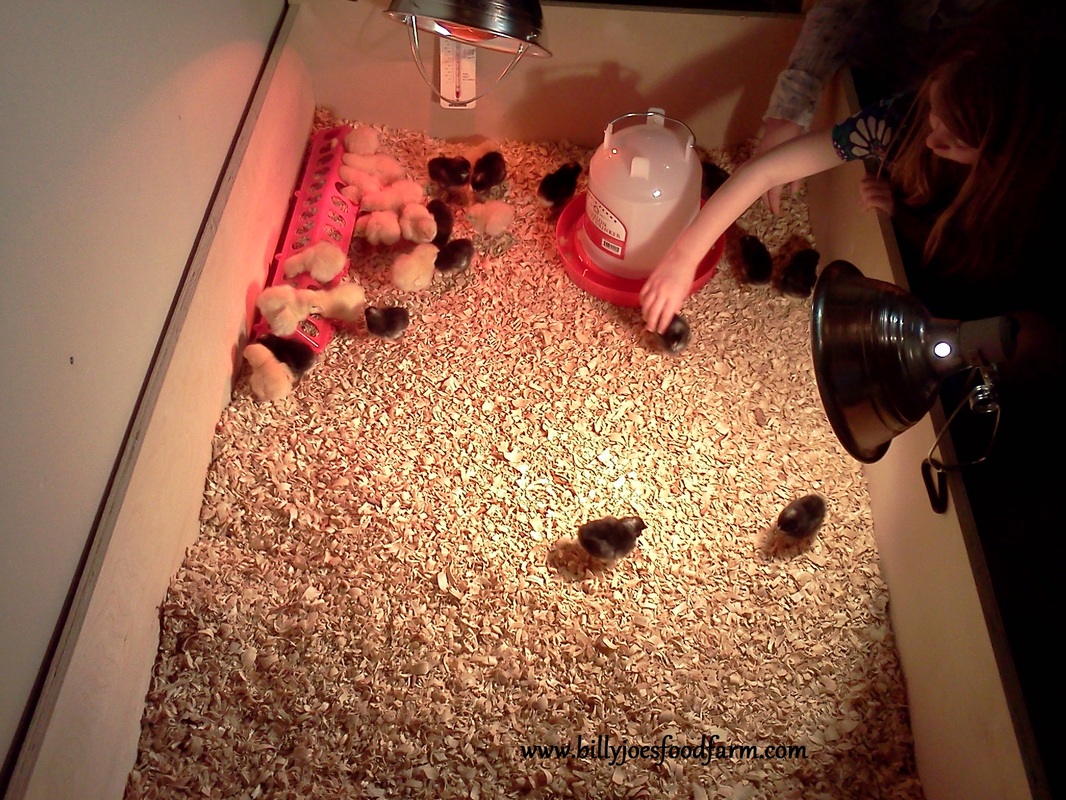
This is how we set them up in our basement, until they were big enough to go outside. 
Picture
5 Comments

Solar Chicken Coop

12/27/2012

5 Comments

 
We moved to this property in November of 2010, and it had never been used as a farm for animals.  The back land had been farmed for hay, and at one point (before the house was built), there were horses here, but when we bought the place it was not set up for homesteaders.  It did have a huge metal barn that was used in the past for the horses, but it was wide open on the inside with no stalls or gates.  The previous owners just used it for storage.  We had our work cut out for us to try and build, along and along, into self sufficiency.  I figure that will take another twenty years.  ;)

The first animals I purchased were day old chicks; 14 Buff Orpingtons and 13 Barred Plymouth Rocks.  When they arrived of course I had no coop, and it was freezing outside anyway.  We set up an area in the basement with a heat lamp, some wood chips, and some hastily screwed together pieces of wood to make a rectangle shaped enclosure.  Then we got to work figuring out what we wanted for the coop.  I still to this day have a terrible habit of buying the animals that are part of my plan BEFORE I have their enlcosure or fencing done, but I suppose that is another post for another day.

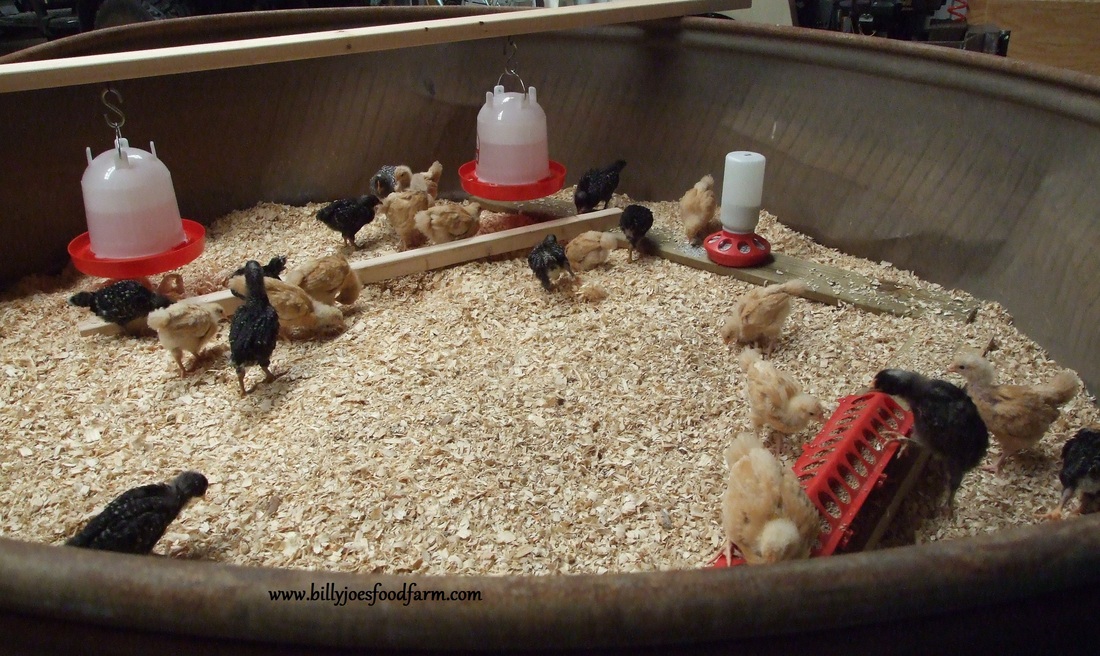
While we were trying to get the coop finished, the birds grew to the point that we could no longer keep them in the house.  We moved them out to the shop, into a big round bale holder that was out in one of the pastures when we moved in.  Worked well for the teenaged birds through January and February asl ong as we kept a couple of heat lamps there for them.  Toward the end of their stay in the shop the birds had all their feathers and could fly out of the trough.  As a result, the shop was COVERED in poo; we couldn't get the coop done fast enough.

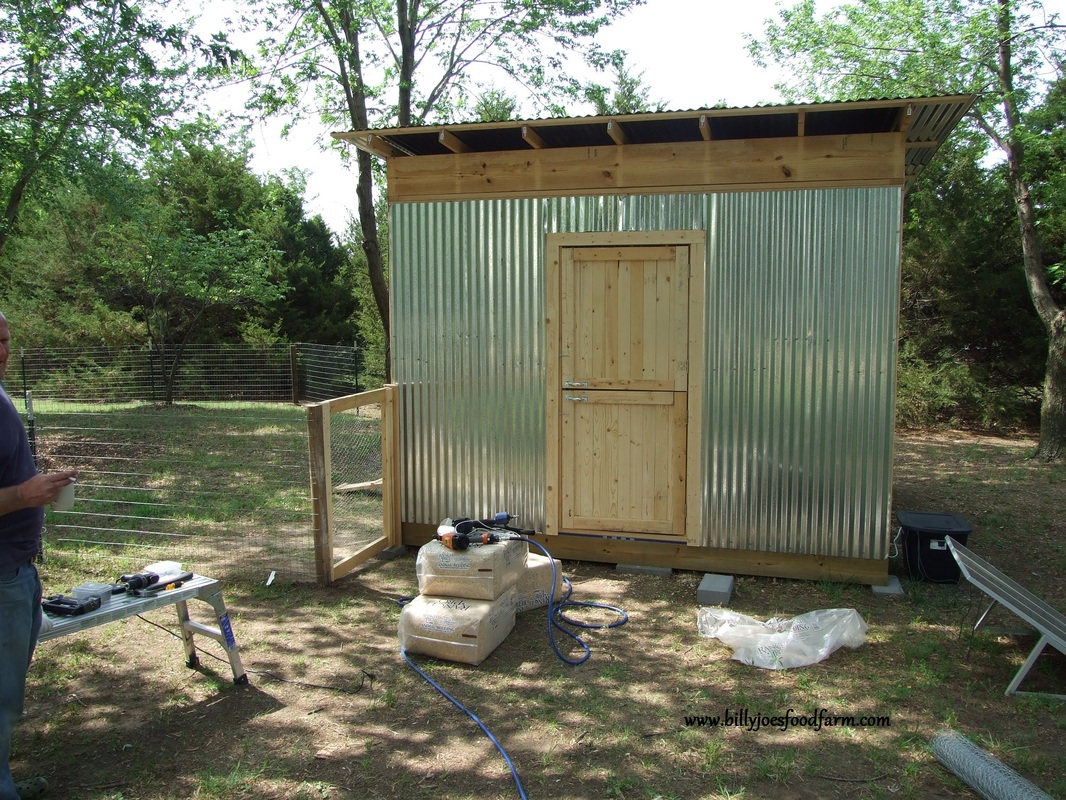
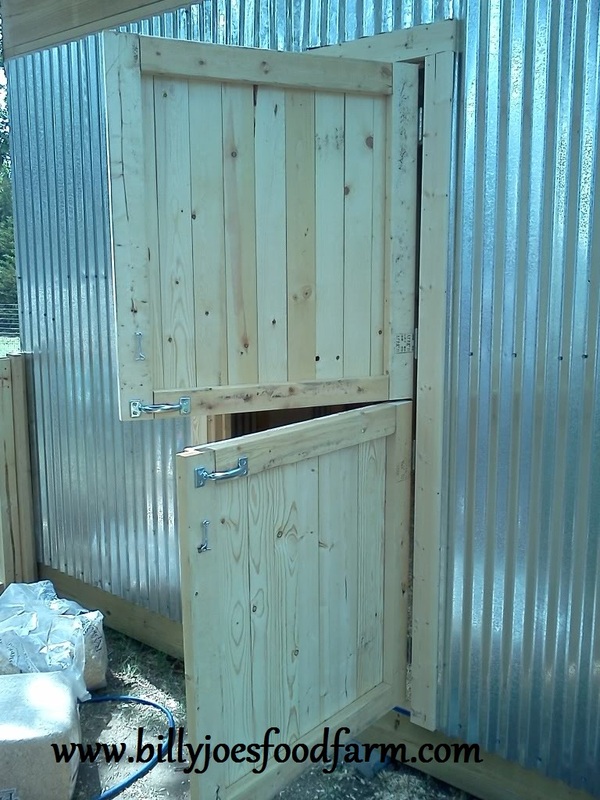
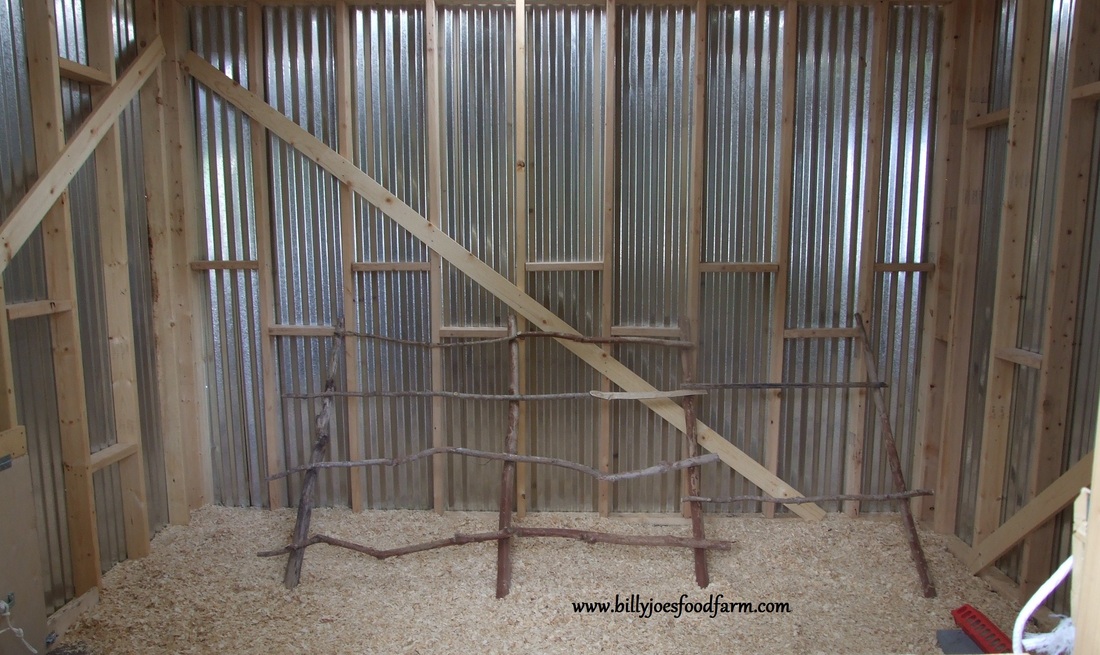
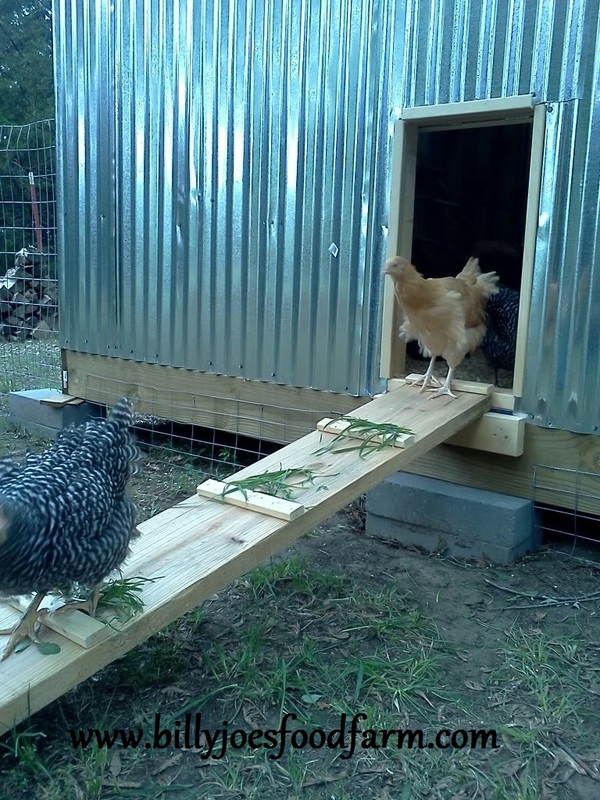
These are photos of the finished coop.  We built it off of the ground so nothing could dig into it, and it is metal so snakes can't slither up into it.  The hatch has a lock on the inside, so the raccoons and possums can't raid the joint at night.  Hubby used two pieces of clear corrugated fiberglass in the roof to let light in, and made Dutch doors so that we could check on the birds without letting them out.  The floor is solid plywood, with some leftover linoleum from our old house on top of the plywood, so that it wouldn't rot.

The roost is made of a big crepe myrtle that had died, and left behind it's perfectly round, smooth branches and trunks.  I have a couple more single rung roosts in two of the corners, as well as a row of nesting boxes.

This coop has served us very well for the past two years.  The solar system works perfectly, and is the same system as the one from Harbor Freight that I posted a while ago.  Now I just need to get the broody house finished for the setting hens in the spring!
5 Comments

Butcher Day - GRAPHIC DESCRIPTION

5/9/2012

5 Comments

 
My first butcher day.  It is a strange milestone to achieve, never having killed anything more than a bug.  We had one Barred Rock rooster and three guineas chosen for the day, having rounded them up the night before.  The rooster is one that we had raised from a day old chick and had grown into a mean, abusive bird; mean to us and abusive to his chicken lady friends, scratching all their feathers off of their backs.  He had to go. 

An old guy at the farm store told us that if you separate the rooster for a couple of weeks and feed him as much as he will eat, he will be more tender, as his stress and testosterone levels will be reduced being apart from the flock.  So that is what we did.  By Butcher Day, the rooster had been by himself in the shop for three weeks, eating and eating and eating.  And he was still  trying to eat your face off if you went near him.  Lord how I hated that stupid rooster.

My loyal friend Sue was the impetus to actually getting this done.  I don't think I would have had the nerve to ever do it if it weren't for her desire to learn right along with me.  The little girls and I rode out to Sue's house in the old beater farm truck, four birds in two cages riding along in back, oblivious to their fate.  We stopped at a gas station along the way, and I wondered if the people around me knew what I was about to do, or were just curious as to why the crazy lady in overalls was carting around a bunch of noisy birds.  Perhaps they weren't paying attention at all, and it was just my own guilty conscience yelling at me.

We rolled up to Sue's place, the girls in the back of the truck unsure of how this was going to unfold.  They wanted to go and I wanted them there, to learn that if a person eats meat, something has to pay for it with their life.  It is an unpleasant truth when you are an omnivore, and I truly feel that when human beings are removed from that fact that there becomes a great disconnect from the world, a mental deficiency created in understanding the process of where meat comes from.  It doesn't just magically appear in the grocery stores, wrapped in a tidy plastic package from The Meat Fairy.  I believe everyone who eats meat should witness this process at least once, if for no other reason than to gain some long forgotton respect for the animals that die so that we can eat.  For most of us city folk, watching something be killed, actually bleeding and dying in front of us, is ugly and uncomfortable, something that we do NOT want to admit has taken place every time we eat meat.  It may sound stupid, but it is true.  It is a fact that at some point in our American history of convenience, truth and respect for life have been discarded, as easily as we now throw out a McDonald's hamburger wrapper. 

We had gone to Sue's because her husband has butchered many animals in his day, and we needed someone to show us what the heck to do.  Sue and I had discussed this for months, and I had put it off for months.  She wanted to use the stump/ax method, while I wanted to do the killing cones/razor blade method.  We decided that we would use a stump, prepared with two nails by Sue.  Cully had sharpened the ax and Sue had her whole set up ready to go by the time we got to her place.  Sue had grown up Mennonite, with her mother's side being Amish, so she remembered chickens being butchered from when she was a kid.  I was just hoping those memories would serve us, and the birds, well.

Sue hopped up into the back of the truck and got the rooster out of his cage, grabbing him and holding his head tucked under her arm to keep him calm.  We walked out to the clearing where her garden is, and there was The Stump.  I felt like I was approaching the beheading of one of King Henry's wives.  Beheading?  What was I doing????  It was a bit surreal, I must admit.

Sue moved quickly and got the rooster's head down onto the chopping block, between the nails which were, much to our dismay, too far apart to hold his head in place.  She held his neck down with one hand and I secured his feet with blank minded determintation, having no idea how to have this experience.  I didn't want to disappoint Sue, let her down, or freak out and let go of that rooster.  She struck the first blow with her ax, and it did not cut his head off.  IT DIDN'T WORK.  She struck again, and at this point we were all frantic that the first strike hadn't done the job.  I saw that the rooster's eyes were closed, and I felt a grim disgust at the entire process.  The third blow sent his head to the ground, and Sue held him upside down in the iron supports that she had prepared, but were again too far apart to hold his body.  She held him there to bleed out, but it seemed that all his blood covered the two of us, and he bled very little into the bucket.  My eleven year old was crying, in shock really at what she had seen, and very upset because he wasn't beheaded on the first blow.  We assured her that although his head hadn't been removed, that strike was surely hard enough to have severed his spinal column so that he didn't feel any pain.  At least that is what we were telling ourselves.  Not surprisingly, killing something is supremely brutal.  We were all shocked that we had actually done it.

We took the rooster to the kitchen where Sue had set up a giant pot of boiling water and she scalded the bird.  We went to the deck and plucked him, which was really very easy.  I had read all these stories about how plucking the chicken was the worst part, it took forever and was really difficult.  It isn't.  Yet another lesson learned.  After plucking we went back to the kitchen, where Sue's huband did the cleaning while we watched.  Once the head and feathers are off it pretty much looks like any whole chicken you get from the store, so cleaning it really didn't bother me.  I've cut up many whole birds in my lifetime, so this was a breeze.  And a great anatomy lesson for the girls, as well.

After we got the rooster in the fridge we decided that the stump method was horrifying, and we spotted some old vinegar jugs hanging in one of the outbuildings.  I cut the bottom and the necks off the jugs to use them as killing cones.  After hammering three vinegar jugs to as many trees, Sue got the first guinea.  She is a darned fine bird catcher, by the way.  I put him down into the cone and cut his throat with a box cutter.  The warm blood sprayed all over me, and the girls were afraid I had cut myself.  It wasn't my blood, though; it was the blood of the first animal I have ever killed in my life, all over my hands and clothes.  I still can't really say how I feel about that.  Wrong, and yet right.  Sad, and yet satisfied at knowing that I could actually do it.  Guilty, and yet calm about dispatching the bird quickly.  Having grown up as a kid who loved animals, as an adult who picks up every stray I come across, a woman who loves animals more than humans, it is a very strange thing to kill for food.  And yet, I felt this is something I NEEDED to do, something I wanted to learn.  I feel a responsibity because my family does eat meat, I feel that if we are going to eat animals well then we need to be a part of claiming that life.  People have become detatched from the cycle of hunting and gathering, and I truly feel that that fact is ruining our souls.

We butchered the last two guineas, plucking them and cleaning them faster each time.  By the end of four birds, we were are mentally exhausted.  I don't think we could have done more than four that day.  I left a guinea for Sue and took the two other guineas and the rooster home for us to eat.  I left them in the fridge for two days, to let rigor mortis come and go before putting the guineas in the freezer and cooking the rooster.

I had read and read about stewing laying hens, and that usually around three years old they slow down on egg production and that is when many people butcher them.  The rooster was only one year old, so he was young, right???!!!


Wrong.

I got the bird seasoned and put it in the roasting pan.  Cooked it; it looked beautiful.  After cooling a bit, I began to carve the bird for dinner.  The skin was as tough as leather.  Well, I think, I have never eaten a home raised bird before, maybe they are tougher than store bought birds.  I get the thing carved up and we sit down to eat.  NO ONE COULD BITE THROUGH IT.  It was as tough as solid rubber, and I am not kidding.  The breast meat was super juicy and less tough, but still was like eating something weird and foreign; the texture was just wrong.  I told my family that we were going to eat it anyway, that this bird was not going to have died for nothing.  But we literally could not chew it.  I was furious.  I had killed this thing, and we couldn't even eat it.

I buried the remains of the bird out by my garden where he at least could eventually improve the soil for future food production there.  I have learned that one year old is still WAY too old, and that six months is the longest you want to wait if you plan on having anything other than stew pot chicken.  I still haven't cooked the guineas, I'm too scared to do it.  Sue cooked hers, and said it was "okay".  I didn't kill these birds to produce "okay" meat.  I am full of regret to have killed those four brids, knowing what I know now.  They were too old.  Valuable lesson to have learned.

It took me a long time to get around to writing this story, mostly because I really didn't want to recount that day.  I don't know if I will ever do it again.  If I lived alone, I would be a vegetarian.  Meat just isn't important to me.  It is to my family, though, and they are why I do what I do.  So, I suppose a batch of meat birds is in my future, and I will be having more butcher days.  I will get better at it, and it will be less traumatic for the birds and the kids.  But not for me.  Killing is not in my nature, but I will do what I have to do to keep my family fed.  Keeping my family safe and fed; that is the reason behind my drive to learn all of this. 

I do know that the birds I killed that day lived better lives, and had better deaths, than birds from commerical operations.  If we are going to eat meat that is the least we can do.

Yet another day that proves no matter how much you read, experience is the ONLY teacher worth having.  If you really want to learn how to do something, you must simply get out there and DO IT.  This was a difficult lesson for my girls and for me, but I truly believe it was a lesson worth learning: a lesson that will serve us well in the future at our little homestead in the country. 

The
End


5 Comments

Chicken Lessons 101

4/25/2012

0 Comments

 
Last year we purchased 25 tiny adorable fuzzy chicks, and Blake built a brooder down in the basement.  We had never had poultry before, but we sure were enamored with these little creatures who peep-peeped all night long, in a kind of sing song lullaby for us as we slept nearby in our bedroom.  Everyone came over to see the babies, and we oooo-ed and ahhhh-ed over the baby birds as was required.

The first of many lessons for us in poultrydom was that when you mail order from a hatchery, you will get more than you ordered.  We ordered 25 and received 27.  They call the extra chicks packing peanuts, to add warmth and to make up for any that might die during shipping or shortly thereafter.  As you can imagine, being shipped is difficult on the little buggers, so losing chicks after you receive them is not uncommon.  Be prepared, as I have heard very few people talk about 100% survival rates for shipped birds.  I bought them this way so that I could get healthy birds from a reputable breeder, rather than buying chicks at a feed store who have come from parts unkown and might be sick.  As there are no hatcheries nearby, I ordered from Estes Hatchery in Springfield Missouri. 

The post office called at five in the morning to tell us to come and get our noisy package.  After Blake and I had filled ourselves with coffee and could not endure the pleading of our children any longer, the girls and I loaded up in the car to get our new chickens.  We had purchased the chick feeders and waterers, the heat lamps and packs of wood chips.  We had prepared a HUGE plastic bin for them to be in while they were tiny, and we thought we were ready to be chicken parents.

Wrong.  Things never go the way you think they will on a farm.

We brought the biddies home and put them all in the plastic bin.  WAY too small.  As is normal procedure around here, Blake began to scramble to find and build a solution to the problem I had created.  He build a lovely giant brooder out of wood with a plastic liner on the bottom.  Those chicks had so much room, it really was adorable to watch them run around and do their little chicken business.  I could sit there for hours observing tiny little chicken behavior that I had never seen before; strecthing their wings and legs, tilting their heads back to swallow one drop of water at a time.  And sometimes I did just sit and gaze at them, watching my new charges as I dreamt of grown chickens roaming the farm and producing eggs, daydreaming of my girls carrying baskets full of our own eggs straight from our own coop.  No more factory eggs; could we, the city slickers, actually achieve that?

Within 24 hours of bringing the babies home we noticed that their poo was sticking to their behinds.  Now, when you have farm animals, birthing and death, food and manure become a part of your new life.  If you are easily grossed out, farming might be a difficult thing for you.  I have been around animals my entire life, dogs and cats, hamsters and horses, I even volunteered at the zoo to shovel elephant poop just so I could be around the elephants.  In addition to all of those furry creatures, I am a mom, so someone else's bodily fluids have been a part of my entire life.  Dealing with a crusty chicken butt?  I can handle it.

Researching how to deal with this pleasant issue, I come across the common name for it; pasty butt.  I'm not kidding.  It can be deadly, too, and not in a pleasant way (if there is such a thing).  During shipping, chicks can get stressed, causing all manner of problems. 

When you receive your chicks, the first thing you do is take each one out of the box, one by one, and dip their tiny beaks into their water so that they take a drink and so that they learn.  These babies have never had anything to drink.  If they congregate under the heat lamp in a big pile, it is too cold.  If they are scattered to the four corners, it's too hot.  You MUST have a thermometer to know precisely what the temperature is, because too hot or too cold will kill them.  Any kind of stressors can make them sick in the first few weeks.  A couple of days after bringing the chickens home, several of them got pasty butt.  That requires warm water and some paper towels (or cotton balls or q-tips or something).  You have to remove that poop several times a day or it will build up, it will block their heiny, and they will die.  Not a good way to go, so WIPE THOSE BOTTOMS!!    :)

We did end up losing one Buff Orpington chick.  She had the worst of the pasty butt.  Some said give them oats, others said add apple cidar vinegar to the water, some hardened and experienced farmers said cull her, one chick isn't worth the time it takes to try and save it, and they are probably right.  In spite of all the advice, she just couldn't make it no matter how hard I tried.  The girls buried her in a little box and we had a tiny bird funeral for her out by the garden, the first of many life and death issues to be faced on the farm.  Those first lessons are always the most difficult, especially for kids.

Not long after the death of that chick, one little Buff Orpington chick decided that her legs would go wonky.  She couldn't walk correctly, and sometimes not at all.  We segregated her in a see through plastic bin within the brooder so that she could see the other chicks and not get lonely.  I tried various q-tip splints and even sports tape (I even began making a chick sling chair out of a cut up cottage cheese container, but I gave up on that), and nothing really worked well.  We decided to let nature take it's course, and just left her alone.  After a couple of weeks she healed up on her own just fine, and now we can't even tell which one was injured. 

The chicks soon grew into teenagers, and we had to get them out of the house.  But to where?  It was still too cold to put them outside, the coop wasn't 100% finished yet, and the chicks hadn't fully feathered out.  Solution?  There was an old round metal horse trough on the property when we bought it.  We rolled that thing into the shop, filled it full of wood shavings, put the heat lamp above it and voila!  Improvised brooder.  We had bought enough time to finish the coop and keep the teenage chicks warm enough until spring.

We put the goofy looking adolescent birds into the chicken coop when they were about three months old and we have never looked back.  Blake put a four foot fence around the chicken yard, and some of the hens fly out to free range while others are content to stay within the fence and eat scratch, scraps and whatever else we throw over the fence for them.  We gave three hens to a good friend, one rooster got killed, one rooster was butchered, three guineas were butchered, and now we have ten ducks, ten guineas and 23 laying hens.  We currently get +/- two dozen eggs per day, and the girls have started selling them.  We now make enough to buy chicken food and pay the girls a little bit too.

You can read and read and read about how to take care of things when it comes to plants and livestock, and everyone seems to have a different opinion of what works well.  That is when you realize that there really is no "right" way to live this life.  You do the best you can, learn from your mistakes, and move on, hopefully helping others with what you have learned along the way.


0 Comments
Forward>>

    Enter your email address:

    Delivered by FeedBurner

    If you like our blog and would like to help support what we do, please feel free to donate any amount to help keep us going!  Our goal is to use this blog to help care for the animals.  We will let you know how your donations are used.  Thank you!
    Billy Joe's Food Farm
    Organic herbs, spices, teas and oils.
    The Enclyclopedia of Country Living is one of THE best homesteading books I have ever purchased, and I still refer to it often.

    RSS Feed

    Author

    We are city folk who decided to move our family to the country, to experience life the way it ought to be lived...OUTSIDE! 

    Categories

    All
    Butchering
    Chickens
    Ducks
    Food As Medicine/Herbal Medicine
    Food Security
    Gardening
    Gmo
    Goats
    Heirloom Seeds
    Herbal Resources
    Homesteading
    Rabbits
    Self Reliance
    Sheep

    Archives

    February 2014
    November 2013
    July 2013
    June 2013
    May 2013
    April 2013
    March 2013
    February 2013
    January 2013
    December 2012
    November 2012
    May 2012
    April 2012
    March 2012
    February 2012

    Shop Amazon's Kindle Accessories Store
    Search & Win

Billy Joe's Food Farm 

  Raising sheep, goats, chickens, guineas, ducks, dogs, cats, and gardens since 2010.  Oh, and not eating anything but plants and fish.  Welcome!

    Contact Us

Submit
Proudly powered by Weebly