Search Bar
Billy Joe's Food Farm - ᵀʰᵉʳᵉ ᶦˢ ᶠʳᵉᵉᵈᵒᵐ ᶦᶰ ᵃ ˢᵉᵉᵈ⋅™
  • Food Farm Blog
  • Kid's Blog
  • Home
  • FOR SALE
  • Our Animals
  • Photos From Around the Farm
  • Resources and Websites
  • French Lop Rabbits
    • Rabbits For Sale >
      • Bucks
      • Does
    • Raising Kits: Birth to Weanlings
  • Pet Page
    • Up For Adoption
  • Goats
    • For Sale

Using Essential Oils To Keep Flies Away

2/23/2013

0 Comments

 
Having farm animals provides many benefits.  However, along with the fleece, the milk and the eggs, we also have a LOT of flies.  Just sitting on the porch can become a trial.  This spring, I am going to try using essential oils as a deterrent.


From wikihow.com...


Tired of fly sprays and the unwanted chemicals they contain? Are you constantly being bothered or bitten by unwanted pests in your own back yard? There are some very easy solutions to keeping flies away from the
outdoor dining area, and you can do them all yourself. Read on for some helpful tips and hints!


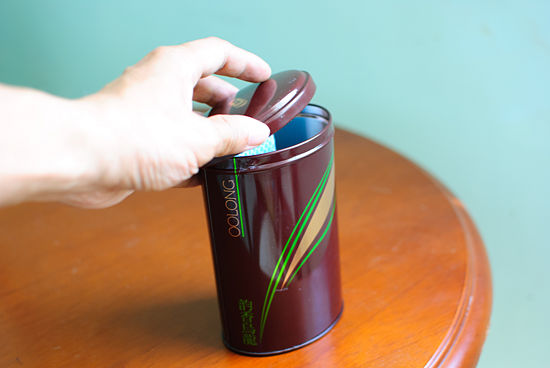
Clean out a small tin with a lid. This will be the "home," so to speak, for your repellent.
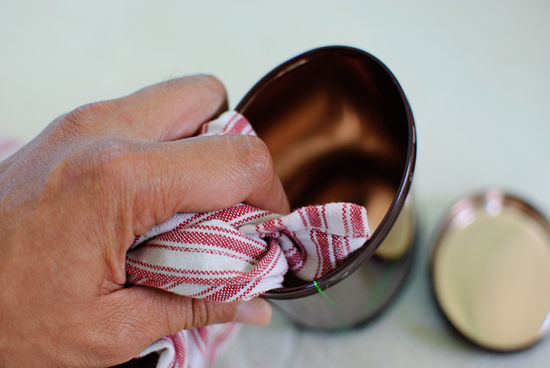
Picture


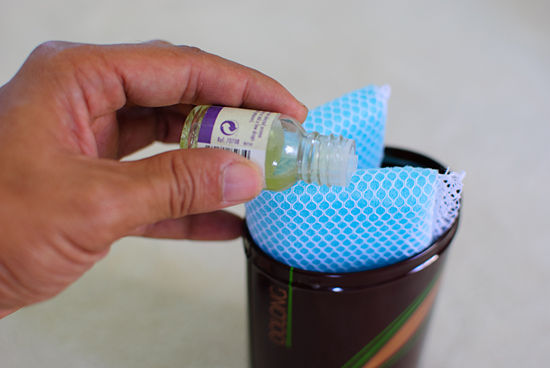
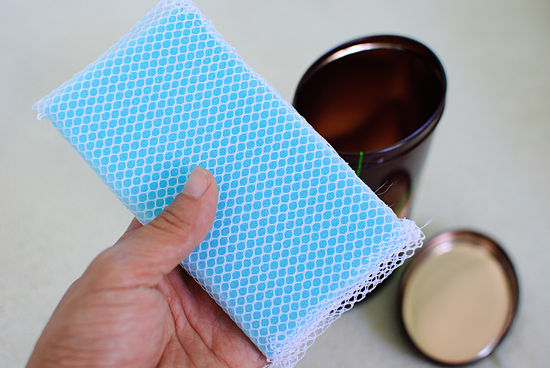
Take a clean piece of cloth or a small piece of dish sponge able to fit into the container
. Saturate it with one of the following oils (after it has been diluted appropriately, see Tips):

Picture


Lavender oil - lavender is considered to be particularly effective against flies
Citronella oil (dilute with water first)
Eucalyptus oil (dilute with water first)
Pennyroyal oil (dilute with water first)
Peppermint oil (dilute with water first; likely more effective against mosquitoes but also considered to work against horse-flies.
Lemongrass oil (dilute with water first)


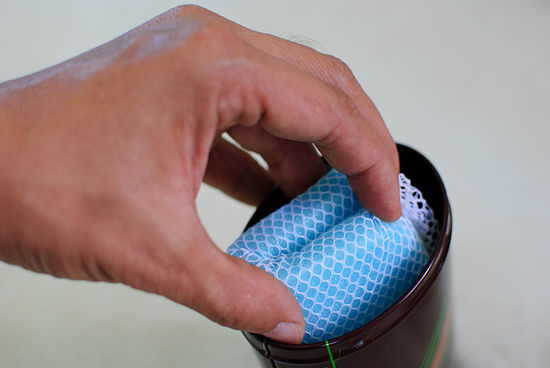
Place the cloth in the tin and shut the lid. Allow to sit for 24 hours.


Picture


Use as needed. Whenever you need to use the tin, remove the lid and place on the entertaining table. Make as many as you wish to put around the entertaining area to deter flies.

Picture


Replenish the oil after each use; once open to the air, the strength weakens and needs to be topped up
.


Picture


Read other tips about using herbs and essential oils for insect repellants at WikiHow - How to make natural repellents with essential oils.
0 Comments

Finally!  Some Progress With Our Many Projects

2/13/2013

3 Comments

 
Spring is a busy time here, and although the calendar tells us that spring is still several weeks away, we are taking advantage of our recent good weather.  We are finally making some progress on some of our many on-going projects.  For us, creating all the spaces, fences and feeders from scratch is a never ending process.

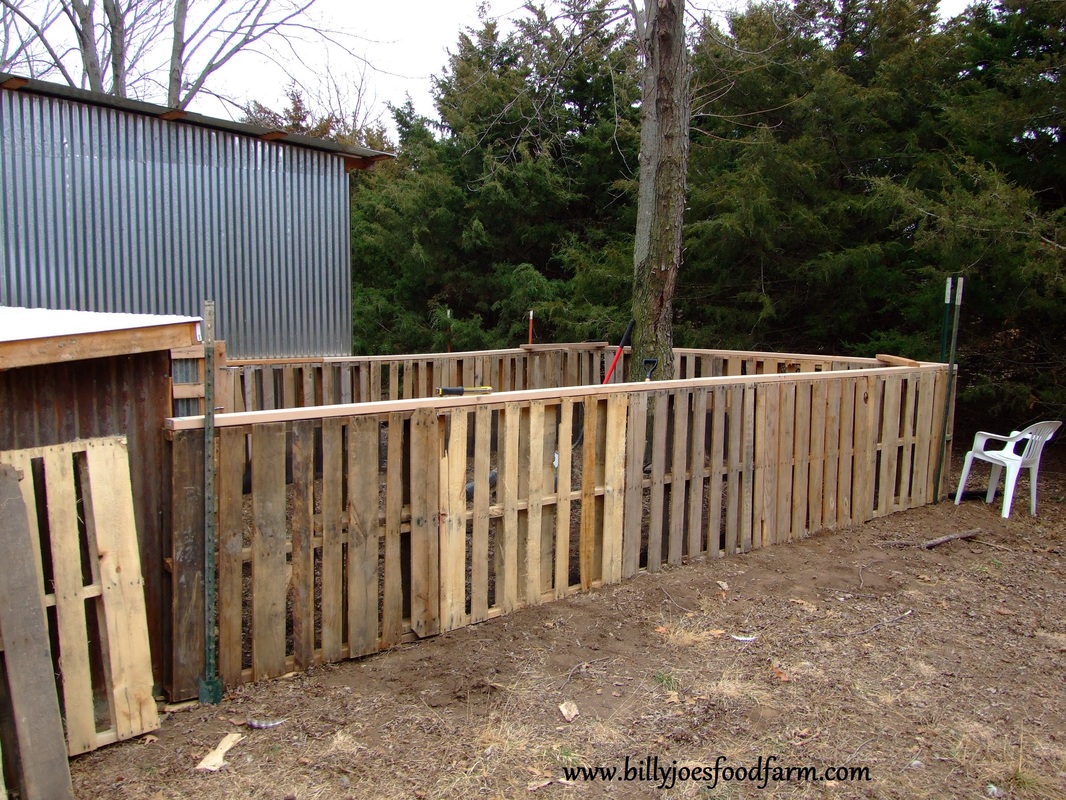
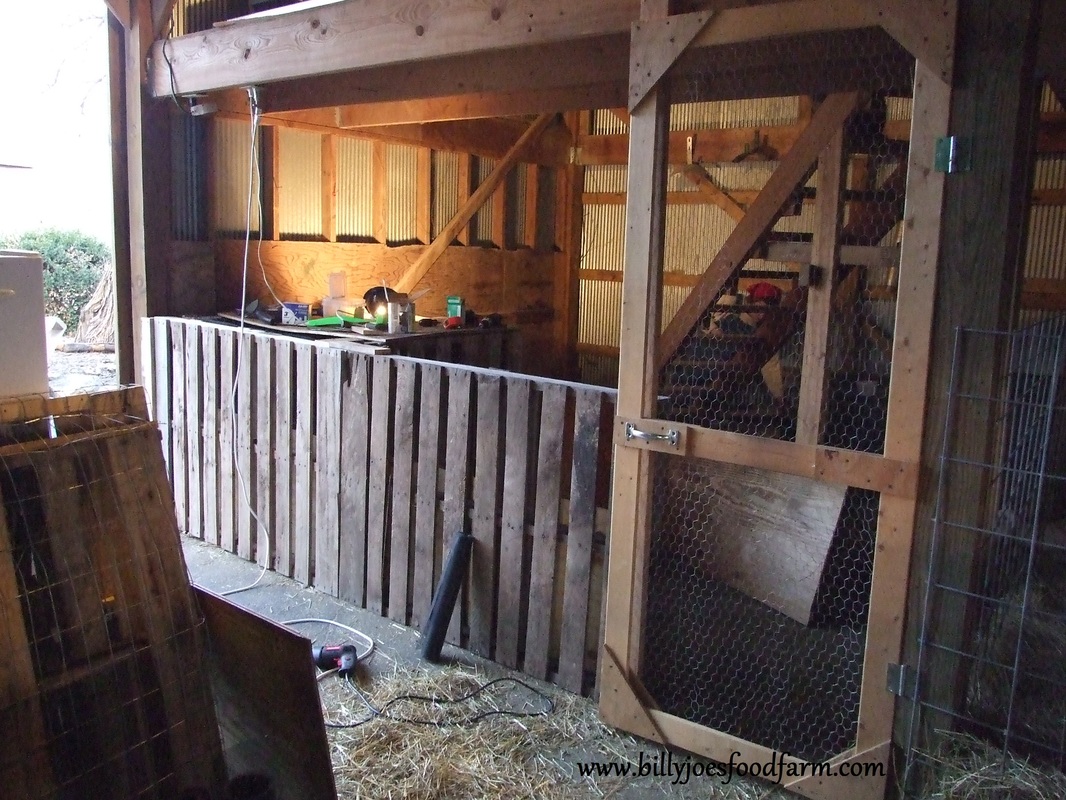
The little rabbits are growing and the bunny enclosure is doing it's job, keeping the rabbits in and the cats out.  Still some finish work (and clean up), to do, but we will wait until the kits are a little bigger so as not to disturb mama and babies.  The below photo shows the rabbit enclosure being built.  It's still not quite finished, but is enclosed.  This photo will give you an idea of how we are using pallets to finish the space.


Picture


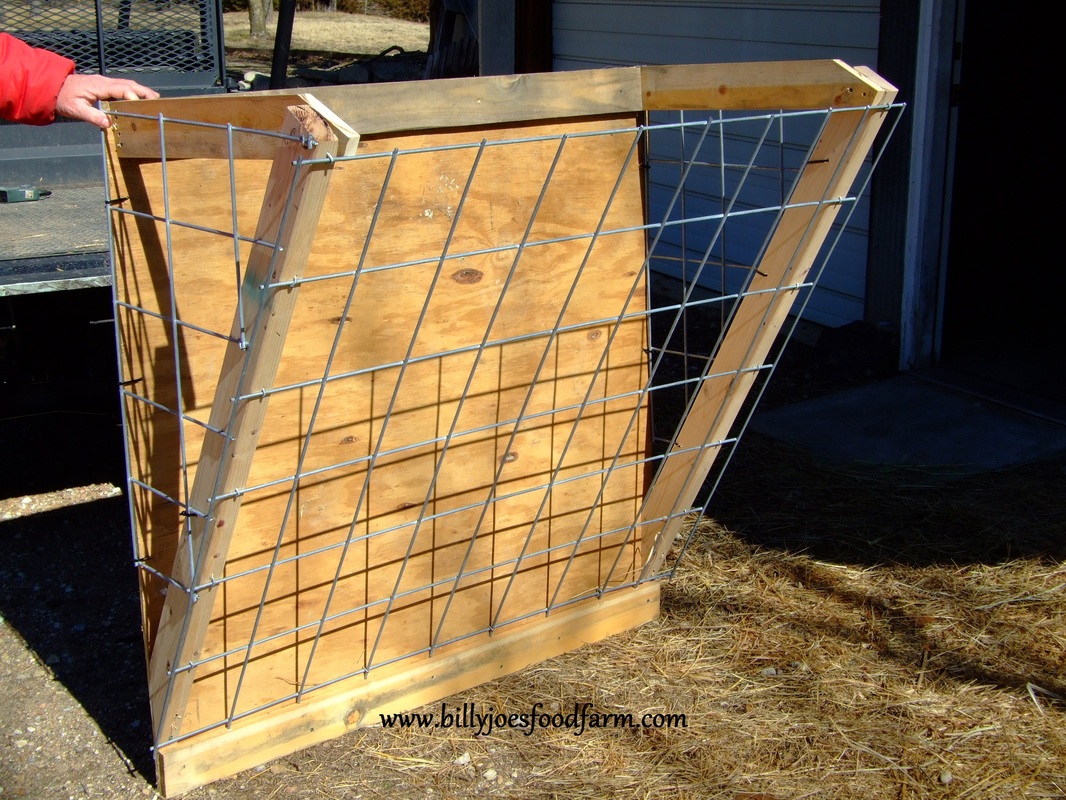
Mr. Elliott built a new hay feeder to hang on the wall of one of the barn stalls, and will be building more for the rest of the stalls.  I am hopeful that we will be wasting less hay now, and the sheep won't have to bend down anymore to eat.  This feeder was built with scrap wood and a hog panel.


Picture


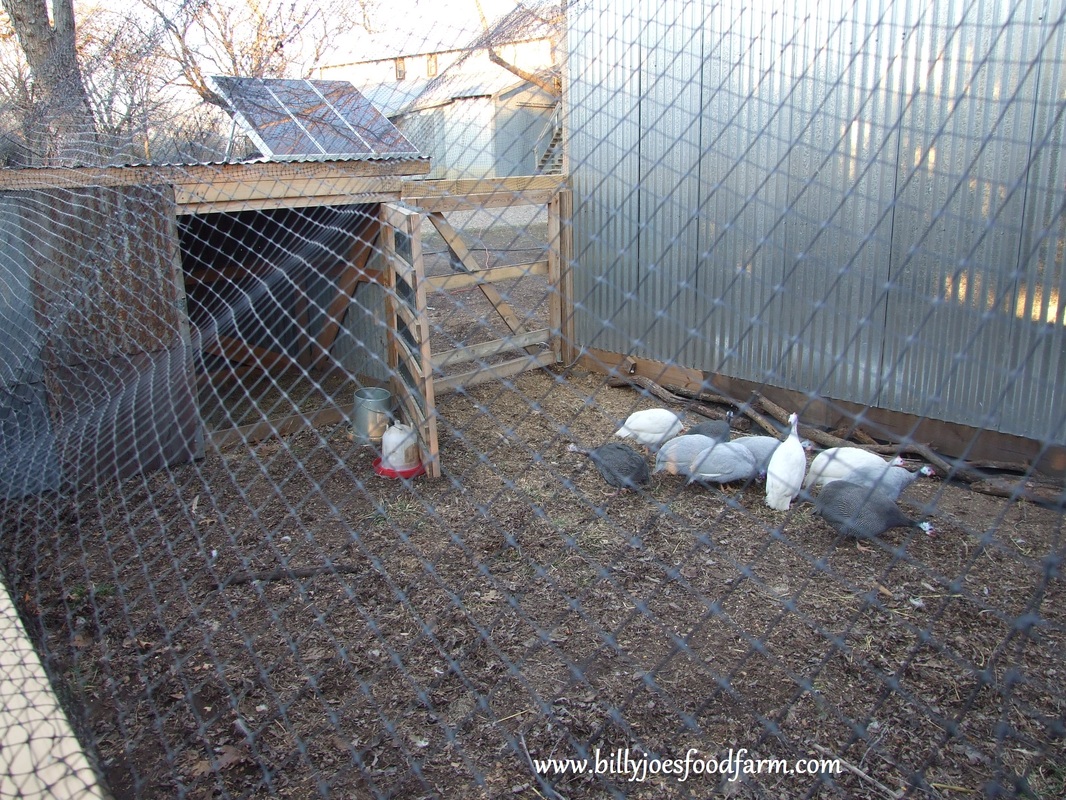
The broody house, next to the chicken coop, now has a fence made from pallets and is fully enclosed above with netting.  The net keeps our birds in as they grow, and keeps the hawks and cats out. 

We have chosen to build our bird coops out of metal, rather than wood.  I prefer the look of wood, but the metal seems to do a better job of keeping the predators out.

The first photo is of the pallets being set up for the fence, the second photo was taken tonight after we finished the netting and put the adolescent guineas in their new enclosure.


Picture
Picture


We are in the process of building a feed storage building out of pallets, and a moveable fence with pallets as well.  Then we have more hay feeders to build, and some table height gardens for me.  I am hopeful we will get most of our building projects finished before I have to consolidate my efforts into growing some food.  Homesteading is sometimes hectic, and often exhausting, but always changing, and never boring.


Now I need to revamp my chicken tractor before the new chicks hatch...tick tock, tick tock...
3 Comments

Never A Dull Moment Here At the Farm

2/5/2013

2 Comments

 
It is a beautiful, and strangely warm, February day here in Kansas.  Many doings are afoot outside, in a furious attempt to get ready for spring.  Cleaning out the barn, finishing the rabbit enclosure hopefully before the babies are born, trying to construct the fencing for the broody house so we can hatch some eggs and sell some chicks, babying the seedlings so they will be ready for transplant, finding time to get a new load of straw bales for some raised bed gardens we are planing this year, and on and on the list goes.  

I have so many articles waiting to be finished so that I can put them here for you, but I suppose I need to find time when the sun goes down for that; daylight is burning away and there is much to be done outside.

My Newfoundland keeps finding bits of a rotting dear carcass, which is making her sick.  Woke up this morning to a rather unpleasant gift from her, and found that I have probably killed my celery as well.  It appears the pots were too close to the heater I use to raise the air temperature for our seed starting area, and the celery has collapsed.  Ah well, I will just start more, and learn that celery does NOT like to be warm.

And so, as I drain the last of my morning coffee, all these issues are bouncing around in my head, waiting for me to fix/build/care for them all.  I leave you with this photo, which makes me smile, and the idea that homegrown food is not only good for you physical health, but your mental health as well. 


Picture
2 Comments

Baking Soda for Ruminant Bloat, or, How My Ram Cheats Death

1/27/2013

5 Comments

 
BLOAT - from the Merck Veterinary Manual..."Bloat is an overdistention of the rumenoreticulum with the gases of fermentation..."


My first experience with bloat happened the very first morning that I had sheep.  Actually it was the very first morning that I had A sheep, as in the first one I ever had. 

Nigel, our East Friesian dairy ram, was two months old when we brought him home.  I knew I wanted to start my own dairy herd, and I was lucky enough to find this ram only a couple of hours away.  He was our first sheep, and I suppose he is fortunate to have survived this long with that dubious distinction.

After we brought him home, we put him in the barn, which was wide open and had no stalls.  We installed some temporary chicken wire as Nigel's stall, and felt okay about it as we left for the evening.  He was just a little baby sheep, surely he would be fine until morning.

When I went out to check on the little guy the next morning, I found him lying down and severely bloated.  He had smashed through the chicken wire (a bit of foreshadowing here regarding his behavior), and had gotten into the bag of sheep feed, that we of course had not locked up because we thought he was secure.  The lesson we learned at this point; NEVER leave any food out, no matter how secure you think your animals are.

Frantic that I had killed my very first farm animal, I called around trying to find a vet in my area that knew anything about sheep.  Not an easy thing around here, where everyone keeps goats and VERY few people keep sheep.  I finally found one (who would not come out), who told me to give him nothing but prairie hay for the next week, and hope for the best.  That's it???!!!!  ARGH.  Surely there was something else I could do!

Hubby ran to the farm supply store and brought back drenching equipment, tubing equipment, bloat treatments, anything and everything he could find that might help us.  I, on the other hand, was furiously searching the internet for anything I could do that might help my little ram.

What I found was a treatment that used things I already had on hand; baking soda and vegetable oil.  I am not a vet, and I have never owned any kind of livestock, but I figured if I didn't do something my ram was going to die.  They say once a sheep is down, it will never get back up.  I had nothing to lose.

I mixed some baking soda, water and a bit of vegetable oil, and loaded the oral syringe that hubby had brought back in the bags of possible supplies from the farm store.  I ran to the barn, grabbed Nigel, and crammed the syringe into his mouth.  He didn't like it of course, but I was able to get all of the contents down his gullet.

Within an hour, he looked better.  Within 24 hours, he was fine.  I had cheated barnyard death, and kept my spirits up, thinking maybe I could actually keep livestock without killing them.

Fast forward two years, and Nigel is STILL smashing through fencing and gates, causing me endless amounts of trouble.  The other day I went out to feed everyone, and Nigel is lying on the ground, his belly swollen so badly I could see it from a distance.  I rush over to him and he gets up.  Oh.  My.  Lord.  I have never seen anything like it.  I honestly couldn't believe that his rumen hadn't burst, he was that huge.

We usually feed him mostly prairie hay, with a small amount of alfalfa.  The last time we bought bales of alfalfa was in July.  Last week, we ran out, and our supplier has no more.  It would seem that most people around here are out.  As a result, we bought to bags of alfalfa cubes from the farm store, hoping to use that while we try and locate more bales.

Now, with sheep you can't just start feeding them different food, it can kill them.  New food must be introduced slowly.  Ruminants, like sheep, goats and cattle, create gasses in their rumens as they process what they have eaten.  When those gases build up too much, which can be caused by eating too much or eating new foods with no transition, it is called bloat.  And it is a killer.

Nigel has a fairly bossy attitude, and if he doesn't get what he wants he WILL throw a fit.  In the two days between running out of alfalfa and getting bagged cubes, someone here had been giving him corn.  That resulted in Nigel blowing up like a balloon from the Macy's parade.

My initial thought was to try and deflate him as much as I could, but if I couldn't do it FAST, I thought I was going to have to insert a needle into his rumen to pull out some air.  I was that worried.  I immediately shoved a handful of plain baking soda into his face, which often they will nibble on as they need it.  I got the smallest amount into his mouth.  Nigel was having none of it.

I ran into the house (which is a pretty big deal; I don't run if I can help it), mixed some water, vegetable oil and baking soda, and loaded the oral syringe gun.  I can't handle Nigel alone, as he probably weighs two hundred pounds, and hubby was no where to be found.  I couldn't wait.  I tried holding one horn across the gate and using the other hand to stick the syringe into the side of his mouth, but I couldn't hold him.  As a last resort, which I knew could make the situation worse but I was desperate (it was a Sunday, no vet available), I put a tiny bit of sheep pellets in a bucket and soaked them in the baking soda solution. 

It is at times like these, as a homesteader-in-training, when you cross your fingers, and pray.  A lot.

He ate it.

Within thirty minutes, he looked better.  Within three or four hours, he looked normal.

Once again, Nigel had cheated death, and I had escaped the guilt of one of my animals dying on my watch. 

Strangely enough, my past two years of reacting to various crises around here has tempered my reaction.  I no longer panic; I have steely determination to take care of the problem.  That kind of reaction I think can only come from experience, dealing with trouble week after week, and having to solve problems on your own.

The most difficult thing about transitioning to this homesteading life was accepting that it is a steep learning curve, and unfortunately the animals are the ones who pay the price while you are learning how to care for them.  Reading and research are great, but nothing will take the place of experience. 
5 Comments
Forward>>

    Enter your email address:

    Delivered by FeedBurner

    If you like our blog and would like to help support what we do, please feel free to donate any amount to help keep us going!  Our goal is to use this blog to help care for the animals.  We will let you know how your donations are used.  Thank you!
    Billy Joe's Food Farm
    Organic herbs, spices, teas and oils.
    The Enclyclopedia of Country Living is one of THE best homesteading books I have ever purchased, and I still refer to it often.

    RSS Feed

    Author

    We are city folk who decided to move our family to the country, to experience life the way it ought to be lived...OUTSIDE! 

    Categories

    All
    Butchering
    Chickens
    Ducks
    Food As Medicine/Herbal Medicine
    Food Security
    Gardening
    Gmo
    Goats
    Heirloom Seeds
    Herbal Resources
    Homesteading
    Rabbits
    Self Reliance
    Sheep

    Archives

    February 2014
    November 2013
    July 2013
    June 2013
    May 2013
    April 2013
    March 2013
    February 2013
    January 2013
    December 2012
    November 2012
    May 2012
    April 2012
    March 2012
    February 2012

    Shop Amazon's Kindle Accessories Store
    Search & Win

Billy Joe's Food Farm 

  Raising sheep, goats, chickens, guineas, ducks, dogs, cats, and gardens since 2010.  Oh, and not eating anything but plants and fish.  Welcome!

    Contact Us

Submit
Proudly powered by Weebly